Cash Flow · 8 min read
Your P&L Says You're Profitable. Your Bank Account Says Otherwise.
By Erika Jones · October 21, 2026
Your P&L says you’re profitable. Your bank account says there isn’t enough cash.
Both can be telling the truth.
The profit and loss statement reports performance over a period. Your bank balance shows the cash sitting in your accounts right now. Neither, by itself, tells you how much cash is already committed to next week’s payroll, a tax payment, debt service, or a contractor invoice.
That third question — What is committed next? — is the one that determines whether you have control.
For six- and seven-figure CEOs, this gap is more than a bookkeeping frustration. It can complicate hiring, expansion, owner pay, and tax planning. Profit on paper doesn’t pay payroll. And cash in the bank doesn’t always mean cash available to spend.
Profit and cash answer different questions.
The P&L answers: “Did the business perform?” It summarizes revenue and expenses over a defined period. If your books use accrual accounting, revenue may be recorded when earned, even if the client hasn’t paid yet. Expenses may be recorded when incurred, even if the cash leaves later.
The bank balance answers: “What is here right now?” It is a point-in-time number, not a plan for what must be paid next.
A six- or seven-figure business can report a profit and still feel out of control when cash arrives after obligations are due. This happens often in service-based companies with large client invoices, extended payment terms, recurring payroll, or growth investments that must be funded before the related revenue is collected.
The answer is not to choose between your P&L and your bank account. You need both, and a system that connects performance to cash timing, taxes, and upcoming obligations. That is the foundation of disciplined cash flow management and more confident financial decision making.
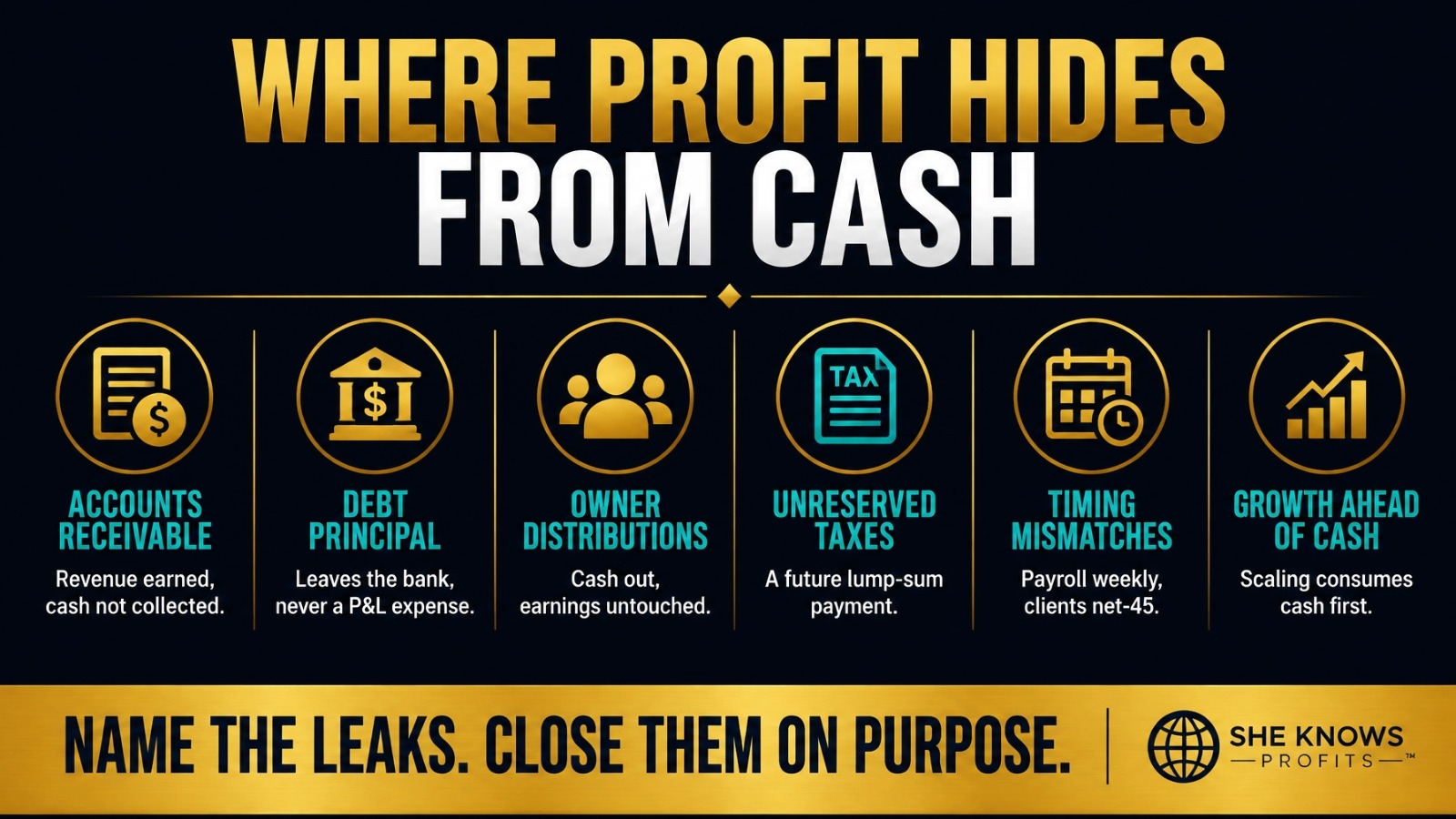
Here are six common reasons reported profit may not become available cash on the same schedule.
1. Accounts receivable: the revenue is earned, but the cash hasn’t arrived.
You complete the work and recognize the revenue. The P&L reflects the sale, but the client has 45- or 60-day payment terms. Until the invoice is collected, the profit is on the statement while the cash is in someone else’s bank account.
That difference matters when payroll or vendors are due before the client pays. For near-term cash flow forecasting, use realistic collection dates, not just the date an invoice was issued.
2. Debt service: principal leaves the bank without appearing as a P&L expense.
A loan payment generally includes interest and principal. Interest is recorded as an expense, but principal repays the loan balance. It is not a P&L expense. Both parts of the payment leave your bank account.
If your forecast tracks only expenses from the P&L, it can miss a meaningful cash commitment. Interest is an expense; principal is a cash event.
3. Owner distributions: cash moves out, but the business can still show retained earnings.
When you transfer money from the business to yourself as an owner distribution, cash leaves the company. That transfer is generally not an operating expense on the P&L, so it does not reduce reported profit in the same way a business expense does.
Owner pay and distributions need a deliberate place in your cash plan. Without one, personal transfers can compete with payroll, taxes, and other operating needs.
4. Taxes: the obligation is a future cash event that needs a reserve.
A P&L may show pre-tax profit, while taxes are due later, sometimes in estimated payments or periodic remittances. The timing and amount depend on the business and its tax situation, but the cash still needs to be available when payment is due.
If taxes are not planned for and set aside, a profitable period can create a large, lumpy cash obligation. Tax strategy and cash planning should work together rather than being treated as separate tasks.
5. Timing differences: cash leaves on a schedule that revenue doesn’t follow.
Payroll may hit on Friday. A client may pay on net-30 or net-45 terms. A quarterly obligation may arrive once every three months. These outflows and inflows rarely line up neatly.
For example, a company can deliver profitable work in one month, run payroll twice, and still be waiting on a large client payment. That is a timing mismatch, not necessarily a sign the underlying work was unprofitable. It is a reason to plan around the week cash is expected to move.
6. Growth: scaling often uses cash before it generates cash.
Growth can require more payroll, contractors, inventory, marketing, equipment, or deposits before the new revenue is collected. When sales increase, accounts receivable and delivery costs can grow with them.
That means profitable business growth can intensify cash flow problems if you expand without estimating the cash required to support the next stage. More revenue is valuable, but the timing and cost of producing it matter.
The instrument: a 13-week cash-flow forecast
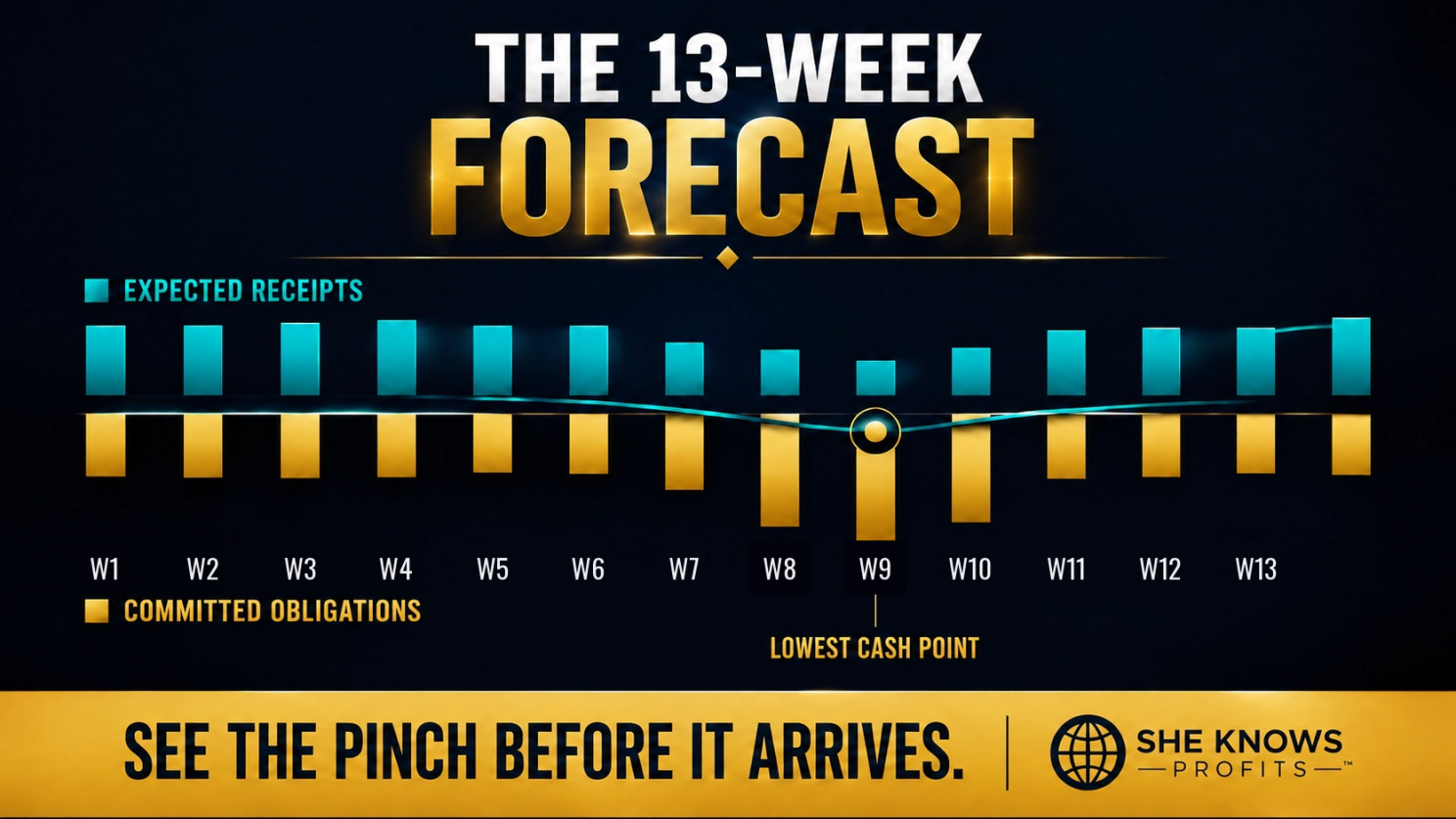
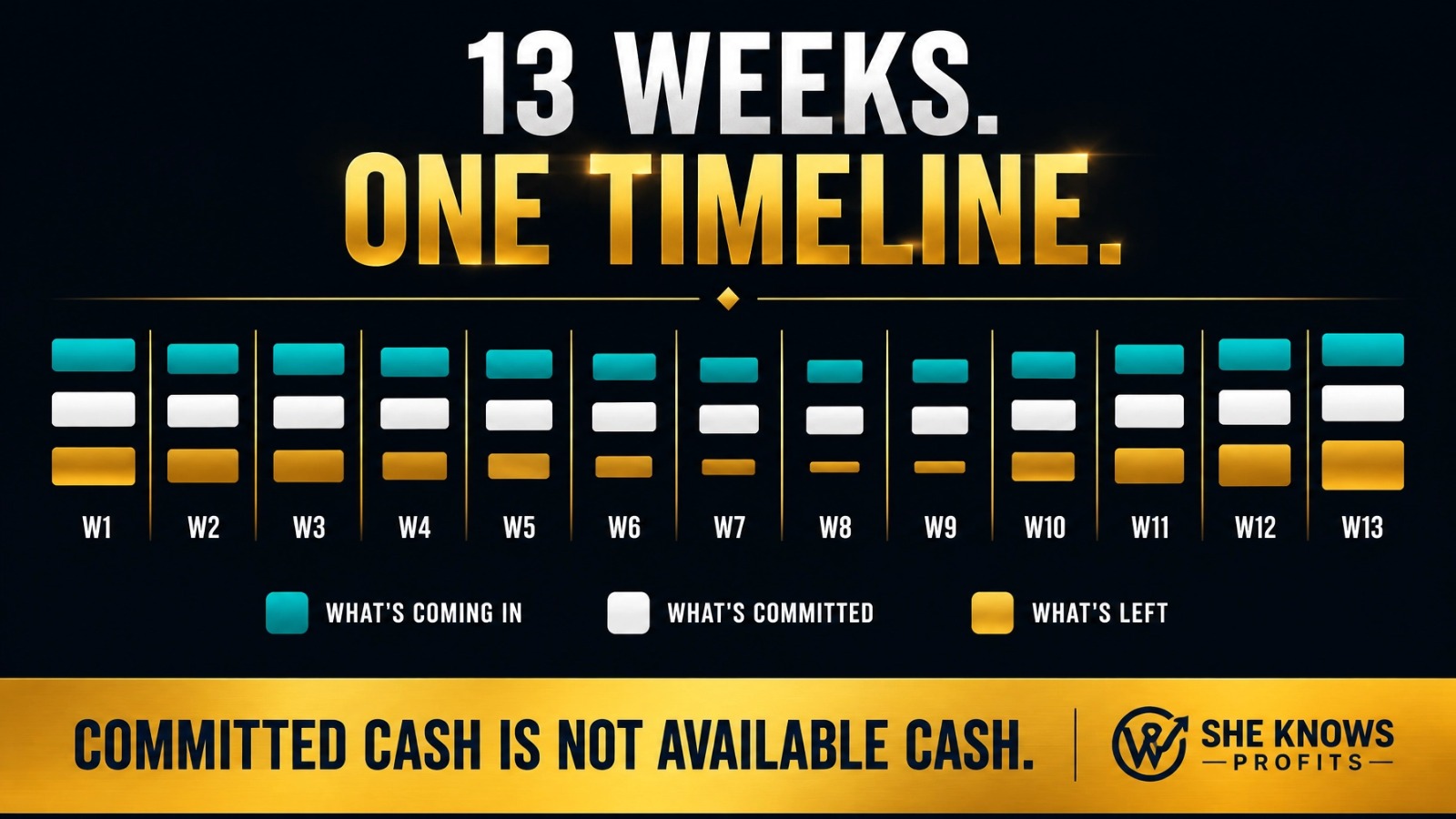
A 13-week cash-flow forecast helps close the gap between reported profit and available cash. It lays out what cash is expected to come in, what is already committed to go out, and what may be left. Week by week, before the pinch arrives.
It is not a substitute for the P&L. It answers a different management question: can the business meet its obligations as they come due, and what decisions should happen before cash gets tight?
This is why a bank balance alone is not a cash plan. A cash balance without context can feel reassuring right up until payroll, debt service, taxes, and vendor payments arrive together.
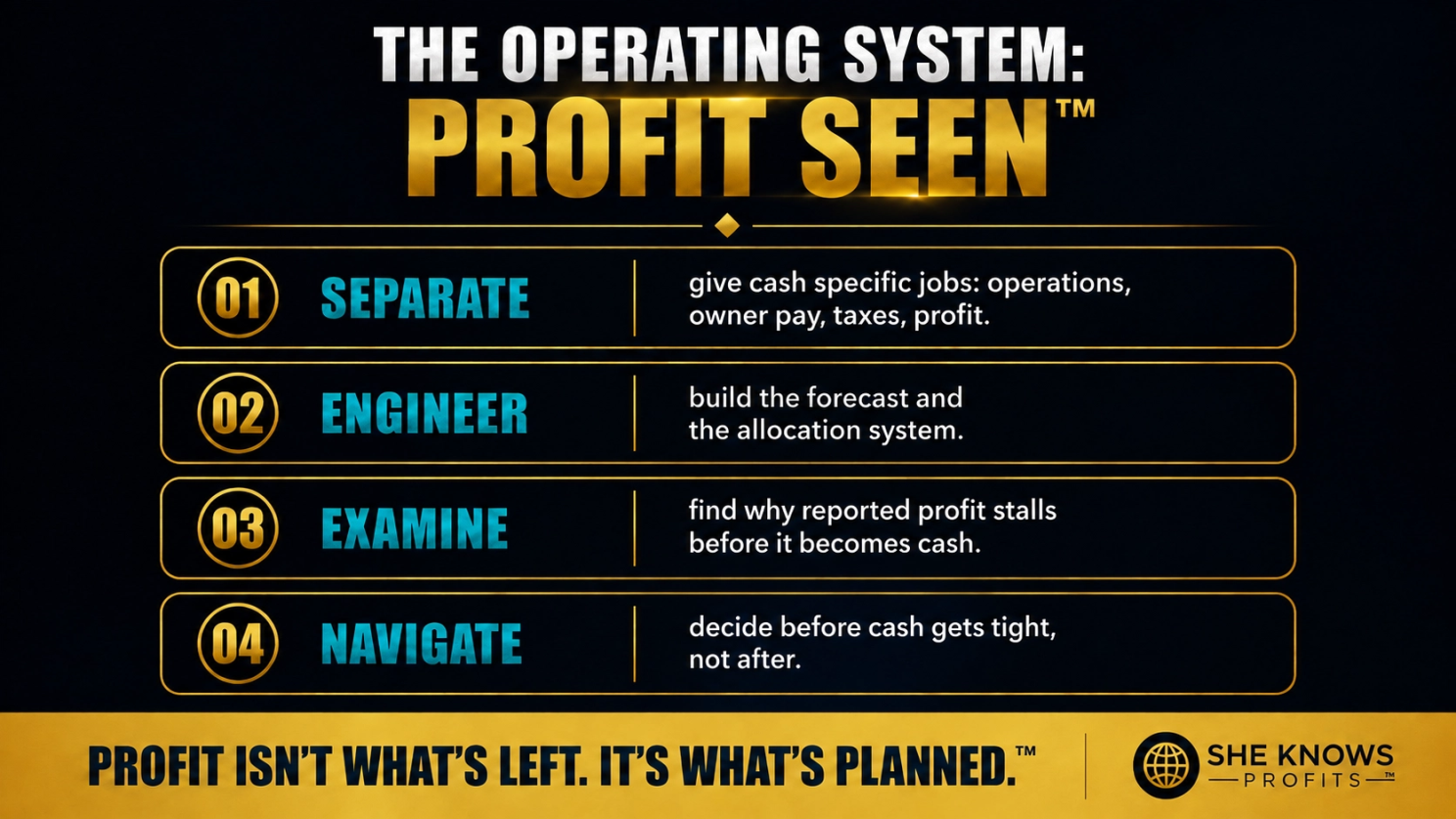
The operating system: Profit SEEN™
At She Knows Profits™, our Profit SEEN™ Framework connects the numbers to decisions:
Separate cash into specific jobs (operations, owner pay, taxes, and profit) so obligations do not compete invisibly in one account.
Engineer the forecast and allocation system, so incoming cash has a purpose and upcoming payments have a place.
Examine why reported profits are not converting to cash. Review collection timing, debt principal, owner distributions, tax obligations, and growth costs.
Navigate before cash gets tight. Make decisions about hiring, spending, collections, and reserves with forward visibility rather than reacting to a low balance.
This is the work of cash flow planning for small business and growing companies: connect profitability to the timing of real commitments. A cash flow advisory system can help owners build that discipline. For leaders who need executive-level forecasting and decision support, a fractional CFO can help turn financial reporting into a stronger CEO financial strategy.
INVITE
If your business is making money but you don’t have control of it, start by identifying where the gap is forming: delayed collections, debt payments, owner distributions, taxes, timing, or growth.
Then connect that diagnosis to a forward cash view. That is how you move from checking your bank balance to making informed financial decisions ahead of time.
To start a conversation about your cash-flow gaps, visit sheknowsprofits.com/contact and ask about a Cash Flow & Tax Analysis Assessment conversation. Erika Jones, Founder of She Knows Profits™, Fractional CFO, Certified Tax Advisor, and Advanced Certified Profit First Professional, works with business owners to connect profitability, cash flow, tax planning, and upcoming obligations.
Build a financial operating system that lets your business grow with greater visibility, and gives you a clearer path from profit to lasting financial health.